
You can start a notebook business in India two ways. Manufacturing needs roughly ₹5 to ₹20 lakh for machines, space and licences. Print on demand needs none of that: you design the cover, a partner prints and ships each order, and you pay nothing until something sells. The trade is capital for margin.
It’s not as hard as you might think. You just need to follow a few key steps. First, select and design your custom notebooks, then pick a platform to sell them on, and finally, create a solid marketing strategy. That’s basically how to start a notebook business.
Table of Contents
Manufacturing or print on demand: what each route actually costs
Search this topic and almost everything you find is about manufacturing — buying binding machines, renting 500 to 1,000 sq ft, sourcing paper by the tonne. That is a real business and it is not the only one. Worth seeing the two side by side before you pick.
| Manufacturing | Print on demand | |
|---|---|---|
| Money to start | ₹5 lakh to ₹20 lakh, depending on scale | Effectively zero |
| Space | 500 to 1,000 sq ft unit | None |
| Machines | Cutting, binding, creasing, lamination | None |
| Licences and registration | GST, Udyam, trade licence, pollution clearance where applicable | GST once you cross the threshold |
| Minimum order | Thousands of units per run | One |
| Cost per notebook | Low, once volume is real | Higher, every single unit |
| Inventory risk | You hold the stock | None |
| Design changes | Expensive, you already printed the run | Free, change the file |
The honest summary: manufacturing wins on unit cost and loses on risk. If you already have distribution — shops, schools, a wholesale buyer — and you know you will move thousands of units, manufacturing is the better economics by a wide margin.
Print on demand wins when you do not yet know what sells. You can list twenty cover designs, spend nothing on stock, and find out which two people actually buy. Then, if one design sells in the hundreds every month, moving that single design to a bulk print run is where the margin is. The two routes are a sequence, not a choice.
For what the per-unit economics look like on the print-on-demand side, print on demand profit margins goes through the numbers.
Why Sell Notebooks Using Print on Demand?
Print on Demand lets you create, design, and sell your custom notebooks without all the usual headaches of running a traditional online business.
It’s super low-cost, easy to scale, and gives you a lot of creative freedom.
There are some great benefits with print-on-demand to start a notebook business.
1. Affordable
Well, for one, it’s a super minimal upfront investment. You don’t need to worry about managing inventory or paying for storage. The only real expenses you’ll have are for marketing and eCommerce fees.
2. Low-risk
It’s actually pretty low-risk. You don’t pay for any production until someone places an order, so you’re not spending money on products that might not sell.
3. Easy to Set Up
You can integrate your print-on-demand account with your eCommerce platform, and everything’s automated. Once a customer orders, the provider handles the printing, packaging, and shipping.
4. Effortless Customization
You have full creative control to design unique notebooks that people won’t find anywhere else.
Start selling notebooks today
How to Start a Notebook Business in India Using Print-on-Demand in 4 Steps
Here are 4 steps on how to start a notebook business in India using Print-on-Demand.
Step 1: Style Your Notebook

The Blinkstore Catalog offers a variety of customizable notebooks. Some options include:
- Hardcover or softcover
- Spiral binding
- Various paper sizes
- Matte or glossy finish
- Blank or lined pages
Step 2: Prepare Your Designs

Try our easy-to-use AI tools in Mockey.ai to upload or create your own design from scratch.
Key features include:
- AI Image Generator for unique, colorful designs
- One-click Background Removal
- Custom Text Editor with various fonts
- Image Enhancer for improving low-quality images
- Tools for resizing images, AI photography, and all-over-print designs
Looking for ideas? Check out Dribble or Pinterest for custom notebook designs.
Once your design is prepared, use the Mockey mockup generator to create free, realistic mockups for your product listings.
Step 3: Pick a Channel for Sales
Choose where to sell custom notebooks based on the skills, intentions, and who you’re selling to. Every eCommerce marketplace and platform has its pros and cons.
eCommerce Platforms and Marketplaces:
There are plenty of eCommerce platforms with pre-made templates to get you started. You can customize them a lot to make the store look the way you want.
You’ll have to drive the traffic, which could increase the marketing costs. Also, many features come with fees and require a bit of technical know-how.
You could check out Shopify or WooCommerce, for starters.
Setting up a storefront on a marketplace is super quick and easy. The best part is, that these sites already have a lot of traffic, so you don’t have to spend as much on marketing. It’s easier for customers to find your stuff.
You don’t get as much control over your content, and there are some fees too—like for selling and listing products.
A few of the most popular ones are Etsy, Walmart, Amazon, and eBay.
Step 4: Marketing Your Business
With a solid marketing plan, you can attract more customers, stand out from your competitors, and boost notebook sales.
Create a plan that works:
- Set your goals. What do you want to achieve?
- Know your customers. Understand their preferences and how much they’re willing to pay for a notebook.
- Craft your message. Communicate in their language.
- Plan your budget. Decide how much to spend on ads, even a small amount can help.
- Pick your marketing channel. Choose the one that will best reach your customers.
There are several methods to market the business, and it’s best to use a mix of them to reach more people.
1. Using Social Media
Social media allows your notebook business to connect with millions of users worldwide. Create a profile that attracts the target audience and promotes engagement. Post clear images of your custom notebooks, host contests, and give away products to spark interest.
Popular platforms include Facebook, Pinterest, and Instagram.
2. Sending Emails
Emails are a quick, easy, and affordable way to connect with existing and new customers. Email marketing lets you send targeted messages based on their interests. You can use it to announce new products, offer discounts, and encourage repeat purchases in your online store.
Tools like Brevo help you create effective campaigns and automate the process.
3. SEO and Content Marketing
You should really start sharing more relevant content on social media or your website, like articles, product reviews, or tutorials. It’ll help you build a strong presence in the custom notebook industry.
You need to use SEO techniques. Basically, you add keywords that people search for, which helps your content show up in search engine results.
Start with tools like Semrush or Ahrefs Keyword Explorer. They can show you what terms people are using to search for notebooks. Then, you can add those keywords to your posts.
4. Paid Ads
Paid ads can boost traffic to your eCommerce site. They help put your products in front of potential customers who might not have seen them otherwise.
You can use ads on platforms like TikTok, Instagram, Facebook to reach a huge audience there. And if you want to go beyond social media, Google Ads or Microsoft Advertising are a great way to catch people who are searching for what you offer.
Notebook Business Tips
Here are a few tips that will help you start a successful notebook business.
1. Choose a Specific Niche
You can target specific groups of people with a niche. For example, this could be students and teachers or animal lovers of a certain music genre.
You can use tools like Google Trends to discover popular topics. Also, check out eBay, Etsy, and Amazon for ideas for notebook designs.
Focusing on a niche you’re already part of can be beneficial because you understand what they want.
2. Be Ready to Grow
As market trends change, it’s important to regularly check how your store is performing to remain competitive.
Although some eCommerce websites and marketplaces come with analytics tools, there are many other choices available.
3. Build Your Brand
Your brand is the overall identity of your business, including how you look, communicate, and what you stand for. A strong, recognizable brand boosts your visibility, builds customer loyalty, and establishes your reputation in the industry.
Here are the four key aspects of branding:
- Values: Clarify what your business represents. Sharing values with your audience makes it easier to earn their trust.
- Vision: What do you aim to achieve beyond selling notebooks? Is there a message or goal you want to promote?
- Voice: Choose a communication style that resonates with your audience.
- Visuals: Make sure your fonts, images, and overall visual content have a consistent style that distinguishes you from other brands.
4. Offer More Products
Grow your notebook business by adding new products. Our catalog includes over 1000 high-quality items you can customize and sell in your store.
Custom Notebook Business with Blinkstore
Blinkstore lets you easily start your own custom notebook business. We handle production and shipping so you can focus on design, marketing, and sales.
Step 1: Create an Account
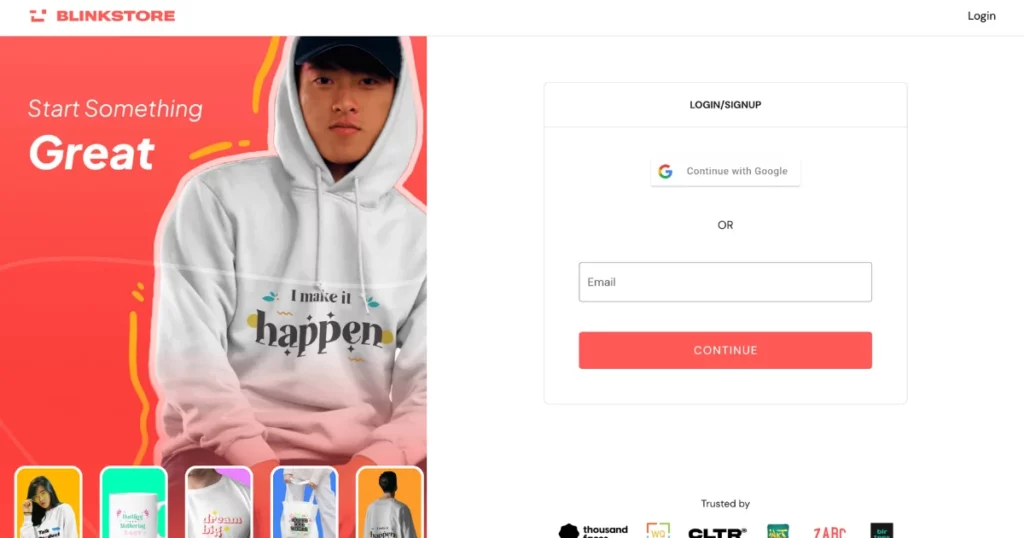
Sign up for a free account to access our Catalog, design tools, and global Print Providers.
Step 2: Choose Notebooks
Select notebooks from our Catalog and click “Sell Now.”
Step 3: Design Your Notebooks
Create or upload your design by tapping “Add Design“.
Step 4: Connect Your Sales Channel
Integrate with popular sales channels easily.
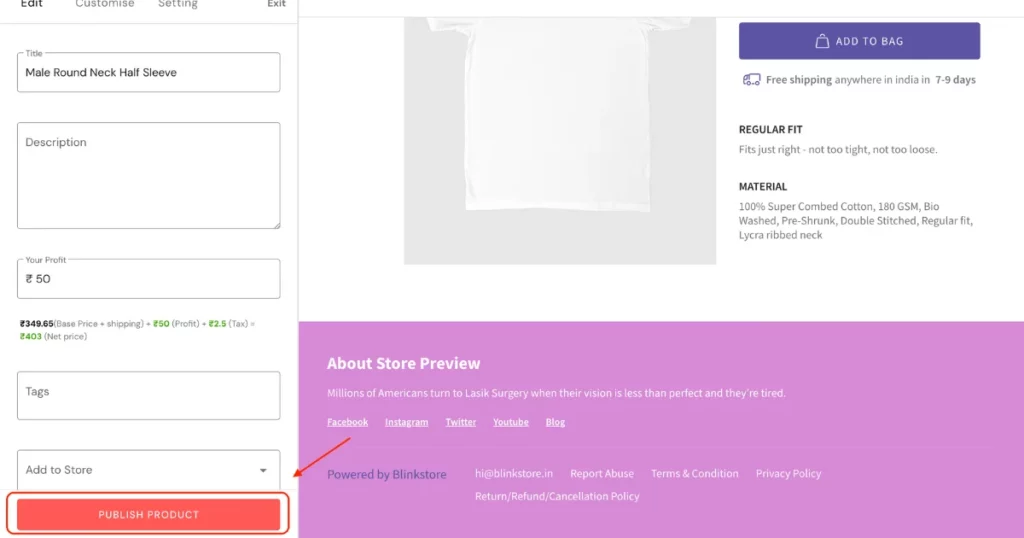
Step 5: Publish and Sell
Publish your notebooks, set prices, and write product descriptions by clicking “Publish Product“. When orders come in, we’ll print and ship them directly to your customers.
Conclusion
As we wrap up our guide on how to start a notebook business, these facts will help kickstart your entrepreneurial journey.
Follow these steps:
- Choose the notebooks you want to sell.
- Create unique designs.
- Select a sales channel.
- Promote your products.
Whether you sell plain notebooks or idea journals, your notebook business can succeed with hard work, dedication, and Blinkstore to support you!
Start a custom notebook business today
FAQs
Is the notebook business profitable?
The notebook business can be profitable because of high demand, especially in schools. With a small starting investment and options for personalized products, entrepreneurs can make good profits by keeping costs low and marketing well.
How much does it cost to set up a notebook business?
Starting a notebook business in India can cost around 10 to 20 lakhs, depending on the size of the business and how you plan to distribute the products. This amount covers materials, equipment, marketing, and other expenses.
How big is the notebook industry in India?
India’s stationery market is worth roughly USD 3.6 billion and is forecast to reach about USD 6.25 billion by 2032, a CAGR of around 8.2%. Paper-based products make up roughly a third of it, and industry disclosures put paper stationery alone near ₹10,000 crore in FY2024-25. This growth is fueled by rising educational needs and more affordable technology options.
Read More:
- how to start a print on demand business
- best print on demand sites in India
- What is Print on Demand and How Does POD Work?
- How to Make Money With Print on Demand in 2024
- How To Start Dropshipping Business in India – Easy Steps
- best dropshipping suppliers in India
- What is Dropshipping Business? How does it work? Pros and Cons
- How to Make Money Dropshipping: 8 Best Ways to Be Successful
